Murder Legends How to Play Sheriff
Proof-based gunplay, stealthy holding, bait awareness, and bystander protection.
The Sheriff role in Murder Legends is short, stressful, and decisive. You are the only player who can end the round with a clean shot—and the only player who can throw the round with one wrong click. This guide covers gun discipline, not flashing the gun, bait awareness, wrong-shot risk, and how to protect Bystanders without becoming free food. Read How to Play Murderer to understand the hunter’s toolkit, and Survive as Bystander so you know who is worth trusting when chaos starts. Beginners should skim Getting Started first; the full index is on the Guides Hub.
Your win condition and your fail condition
You win by shooting the Murderer. You fail if the Murderer deletes you before that happens, if time and bodies run out against the lobby, or—critically—if you shoot a Bystander and eliminate yourself through a wrong shot. That last rule is the entire skill ceiling. Panic accuracy is not skill; proof is.
Hold this sentence in your head all round: no proof, no shot.
Gun discipline: the non-negotiable habit
Gun discipline means three things:
- Your crosshair is ready, but your trigger is bored.
- You shoot animations and commits, not vibes and chat votes.
- You accept that some Murderers will get two kills before you have a legal shot—and that is still better than wrong-shooting the lobby into Hero roulette.
Tip (genre-level): Clear confirms include a visible knife or handblade swing, a chase that only a Murderer would continue after being seen, or a player wiping someone in front of you. Soft tells (weird pathing, staring, “sus” chat) are reasons to follow, not to fire.
Do not flash the gun
Flashing or openly advertising the Sheriff weapon turns you into target number one. Murderers love an identified gun because deleting you creates a dropped gun, a Hero scramble, and information chaos. Keep the gun subtle. Walk like a Bystander. Collect a coin or two so your pathing looks normal. Peek with the group instead of wide-swinging alone like a duelists playlist.
Tip (genre-level): If you must hold an angle, hold it from a place where the Murderer cannot easily sneak your backline. Corner peeks that show only your shot—not your entire hitbox—are friendlier than standing mid-hallway “guarding” everyone.
Bait: expect it, do not donate to it
Strong Murderers bait Sheriffs. They fake flee into off-angles, soft-pressure a group, or leave a gun drop looking free. Your counterplay is patience and second checks:
- If a chase breaks line of sight, pre-aim the re-entry instead of sprinting into the fog.
- If a kill happens and the killer “runs away,” assume they may be holding the exit they want you to take.
- If the Murderer dies… wait, that is your job. If you die, the gun drops—tell Bystanders via movement and chat if safe, but do not expect them to play perfectly.
You are allowed to refuse a bait. Letting one more Bystander die while you gather proof is often correct. Letting yourself die for free is not protection; it is volunteering the Hero mechanic early.
Wrong-shot risk management
Wrong shots happen for predictable reasons:
- Two players collide and you tag the wrong body.
- You trust chat accusing a quiet farmer.
- You shoot someone holding a cosmetic that “looks scary.”
- You panic after a teammate screams.
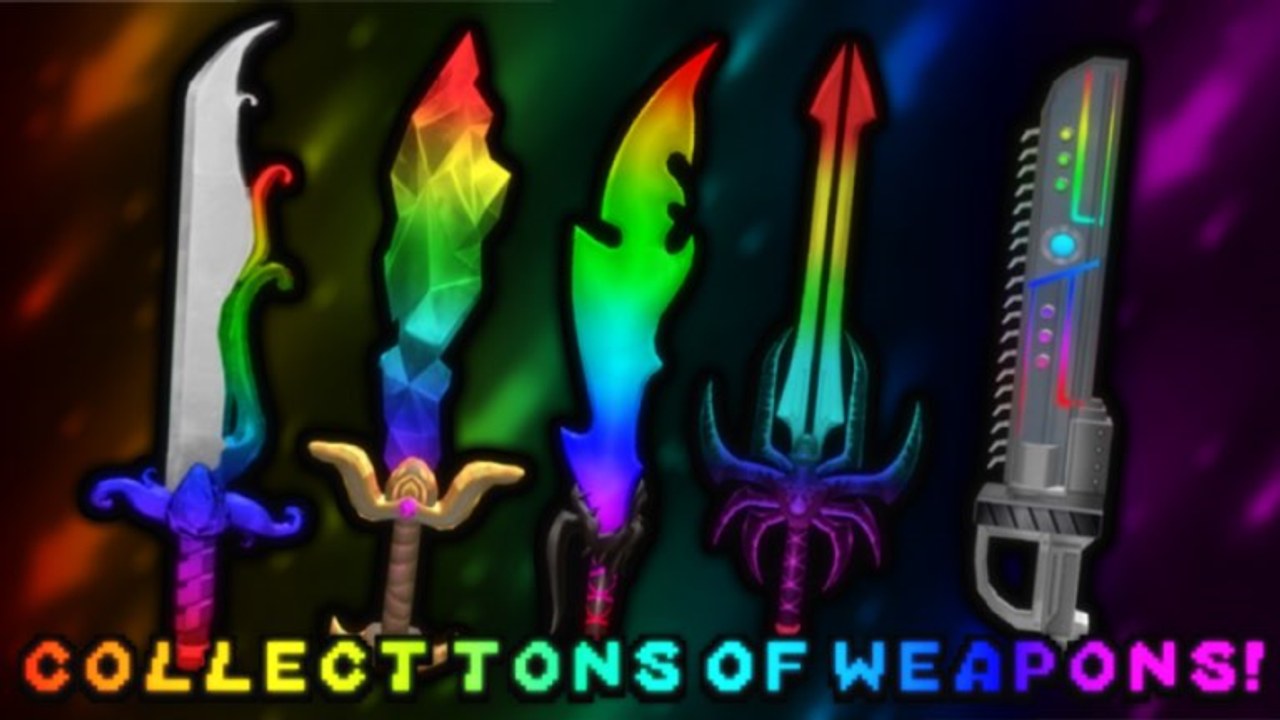
Cosmetics are not evidence. A player with a flashy blade skin from cases or the shop is not automatically Murderer—see Weapons and Cases and the weapons tier list for why cosmetics are mostly visual. Evidence is behavior mid-round.
Tip (genre-level): When two players are stacked, wait a half-beat for separation or for the actual swing animation. A late correct shot beats an early teamkill.
Protecting Bystanders the right way
Protection is positioning and information, not bodyblocking every hallway:
- Stay near a pack without hard-carrying the front of every push.
- Watch the rear and flanks where Murderers farm isolates.
- Call what you see: “knife swing near stairs,” “do not touch gun yet,” “group mid.”
- If you are low on confidence, shepherd Bystanders toward open sightlines instead of narrow death corridors.
Your job is not to die stylishly for strangers. Your job is to convert proof into a Murderer elimination while keeping enough Bystanders alive that a mistake is recoverable.
Mid-round decision tree
Use a simple tree:
- No suspects with proof → farm vision with the group, do not ego peek.
- Soft suspect → shadow them; force them to act in front of you.
- Hard proof → take the shot as soon as the angle is clean.
- You are being chased with no escape → create space; do not panic-fire into a random teammate who crosses your screen.
- You already wasted positioning → play for a reset rather than a miracle flick through three bodies.
After you die: the gun drop
When a Sheriff falls, the gun can become a Hero pickup for a Bystander. You cannot control that fully, but your earlier habits matter: if you died in a horrible corner, the drop may be unplayable. If you died in a contested but visible space, a calm Bystander following Survive as Bystander has a chance. That is why selfish wide peeks hurt the whole lobby.
Practice loop for Sheriff mains (and forced Sheriffs)
Track one metric for a session: wrong shots. Aim for zero. Secondary metric: deaths that were bait donations versus inevitable loses. Study Murderer habits in How to Play Murderer, refresh basics in Getting Started, and return to the Guides Hub when you need the sibling pages. Check Updates if UI or seasonal cosmetics change how cluttered the lobby looks—visual noise can raise wrong-shot rates even when mechanics are unchanged.
Sheriff play is disciplined boredom until it is sudden certainty. Keep the gun quiet, keep the proof loud, and only then take the shot that ends Murder Legends rounds the right way.
Frequently Asked Questions
Quick answers to the most common Murder Legends questions.
What happens if the Sheriff shoots a Bystander?
A wrong shot eliminates you. Proof-based firing is mandatory—never shoot on chat accusations or cosmetic vibes alone.
Should I show the gun to scare the Murderer?
Usually no. Flashing the gun makes you the priority target and can create an early gun-drop scramble that helps the Murderer.
How do I avoid Sheriff baits?
Do not sprint blindly into broken line-of-sight chases. Pre-aim re-entries, wait for real commits, and accept that patience saves more rounds than hero peeks.
How do I protect Bystanders without dying instantly?
Hold flanks, stay near groups, call information, and take only clean shots. Dying for free is not protection—it just drops the gun early.
What should I read next?
Study the Murderer guide to recognize bait patterns, then the Bystander guide for Hero gun pickup discipline after Sheriff deaths.